One of VetOps' first real customer conversations came from a place I did not originally design for: ChatGPT.
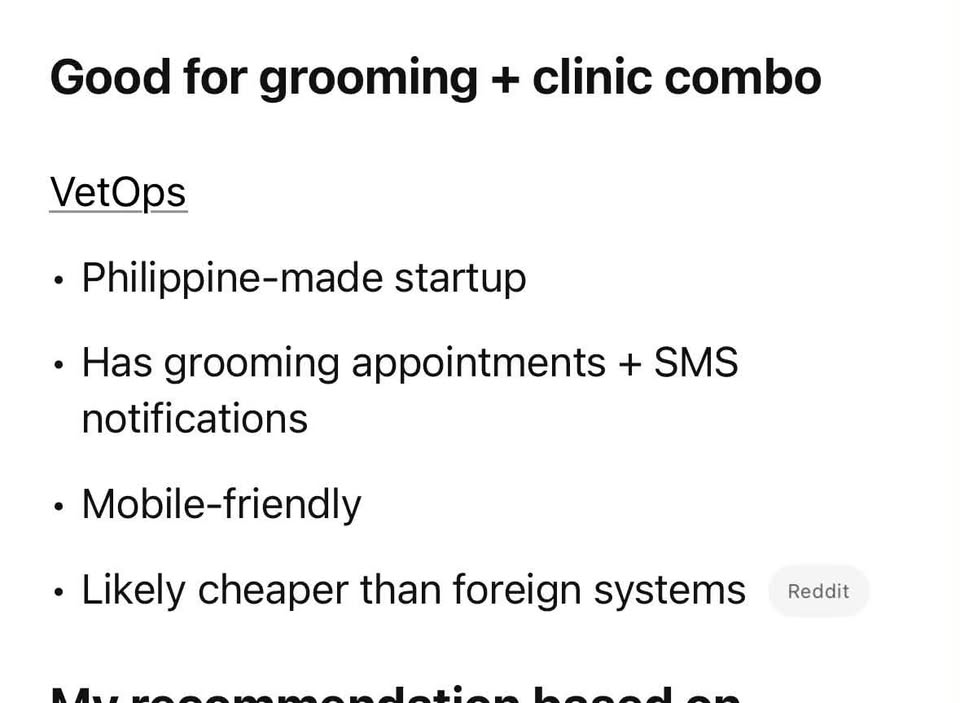
The customer was looking for veterinary clinic software. Not a generic CRM. Not a generic POS. Not an abstract SaaS tool. They needed something specific to clinic work: appointments, patient records, SOAP notes, billing, inventory, reminders, grooming, boarding, and daily reports.
That distinction matters. VetOps was discoverable because the product language matched the way someone would ask for help: "vet clinic management system Philippines," "veterinary practice management software," "software for appointments, records, billing, and SMS reminders." ChatGPT could connect the product to the problem because the site described the real workflow clearly.
AI discovery rewards specificity
Traditional product pages often try to sound bigger than they are. They say things like "streamline operations," "all-in-one platform," or "modern business solution." Those phrases are safe, but they are vague. They do not describe who the product is for or what job it performs.
VetOps uses much more direct language: Philippine clinics, appointments, patient records, SOAP notes, POS, inventory, SMS reminders, grooming, boarding, and reports. That is not as glamorous as broad SaaS messaging, but it is much easier for both humans and AI assistants to understand.
When someone asks ChatGPT for a tool, the model is not only matching brand names. It is matching intent. The clearer the product's domain, features, location, and use case, the easier it is to recommend accurately.
The website had to answer real buying questions
After seeing how discovery happened, I started treating the VetOps site less like a landing page and more like a product knowledge base. The homepage explains the daily clinic flow from booking to checkout. The features page breaks down records, appointments, POS, inventory, SMS reminders, grooming, boarding, reports, and staff roles. The help center explains setup and day-to-day workflows in plain language.
This is useful for customers, but it also helps AI tools understand the product. If a clinic owner asks whether VetOps supports SOAP notes, SMS reminders, inventory, POS, or Android workflows, the answer exists on the site in direct language.
The pricing also has to be explicit. VetOps currently presents a simple offer: three months free, then ₱499/month for core clinic workflows. That kind of concrete detail matters because vague pricing creates friction during both human evaluation and AI-assisted comparison.
Product positioning is now part of engineering
For a product like VetOps, discoverability is not only a marketing problem. It is an engineering and product design problem. The system has to be named around the work it actually supports. The features have to map to real clinic operations. The documentation has to explain edge cases, not just announce features.
The same thinking shaped the product itself. VetOps is built around a full clinic day: booking and intake, clinical care, checkout, reminders, reporting, and stock review. That workflow-first structure makes the product easier to use, easier to explain, and easier to discover.
The lesson
ChatGPT discovery made one thing obvious: clear product language compounds. It helps customers understand the product, helps search engines index it, and helps AI assistants recommend it when the problem matches.
The best positioning is not clever. It is accurate. Say who the product is for, what workflows it handles, what constraints it solves, and what the customer can do next. For VetOps, that means saying plainly that it helps Philippine veterinary clinics manage appointments, patient records, SOAP notes, POS, inventory, SMS reminders, grooming, boarding, and reports from one system.
That is the page ChatGPT can understand. More importantly, it is the page a clinic owner can understand.